


The impact of digital capabilities and innovation on logistics service providers’ perceived performance: The role of digital transformation and policy support
- Faculty of Commerce and Tourism, University of Finance - Marketing, Vietnam
Abstract
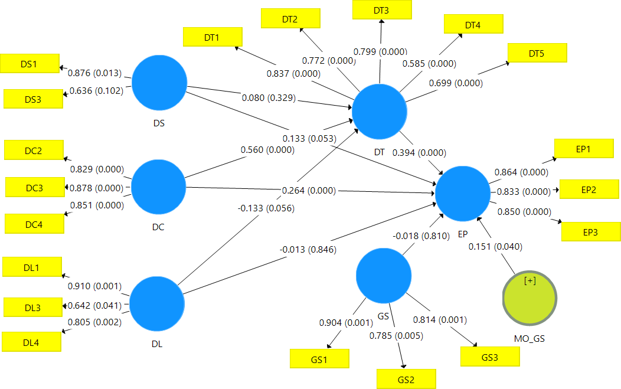
This study investigates how digital factors influence the perceived performance of logistics service companies. Using PLS-SEM with SmartPLS, the analysis was conducted on cross-sectional data from a convenience sample of 188 enterprises in the expanded Ho Chi Minh City. The findings reveal that digital factors have varying mechanisms of impact on perceived performance. The results indicate that digital capabilities significantly affect digital transformation, which in turn enhances perceived performance indirectly. Moreover, digital innovation and digital capabilities also exert direct positive effects on perceived performance. However, digital orientation does not exhibit a statistically significant effect on perceived performance. The study also shows that digital transformation acts as a mediator in the relationship between digital capabilities and perceived performance, while state support moderates the link between digital transformation and perceived performance. These insights will help logistics companies leverage developments in digital technology and the trend toward digitalization. Based on these findings, several implications are suggested to enhance the perceived performance of logistics service companies in the digital age, in the spirit that enterprises should prioritize digital capability and digital innovation rather than focusing only on digital orientation, as these are the paths to a digital presence and position for logistics companies in the international market.