


Dynamic capabilities and firm performance: research directions based on bibliometric analysis techniques
- Faculty of Commerce, Ho Chi Minh City University of Industry and Trade
- Faculty of Business Administration, Ho Chi Minh City University of Industry and Trade
Abstract
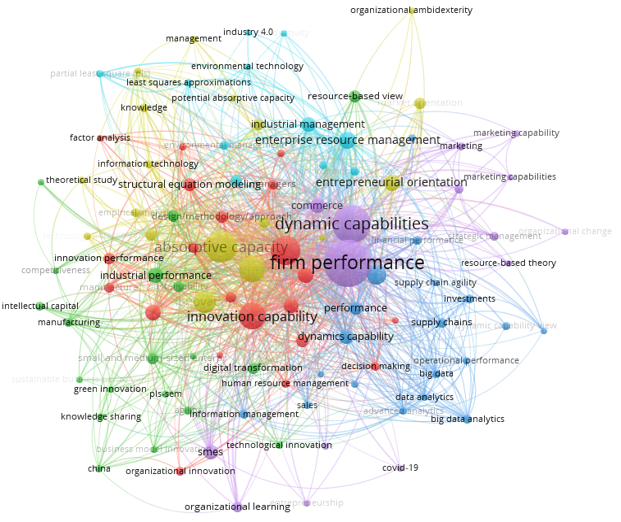
This study reviews the literature on the relationship between dynamic capabilities and firm performance over the period 2003–2025. A total of 452 articles were collected from the Scopus database and analyzed using bibliographic coupling and keyword co-occurrence techniques. The results show that classical and seminal studies continue to play a foundational role in shaping the theoretical framework of dynamic capabilities. At the same time, more recent research increasingly concentrates on digital transformation, big data analytics, and sustainable development. Network analysis identifies eight major research clusters: dynamic capabilities and knowledge management; strategy and absorptive capacity; green innovation and partnerships; project management and organizational resources; circular business models; technological innovation and big data; supply chain management; and the application of digital technologies in logistics. These clusters reflect both the continuity of established research streams and the emergence of new interdisciplinary directions. In parallel, keyword co-occurrence analysis reveals six representative thematic groups: innovation capability; dynamic capabilities in supply chains; green innovation and organizational issues; business orientation and marketing capabilities; and digital transformation and human resource management. Taken together, these findings indicate a clear shift from traditional theoretical perspectives toward more integrated approaches that emphasize the role of digital technologies, data-driven processes, and sustainable business models in enhancing firm performance. This evolution highlights the growing importance of applying dynamic capability frameworks in complex, rapidly changing business environments. Based on the bibliometric evidence, the study provides a comprehensive overview of the development of this research field. It identifies several promising avenues for future research, including more detailed measurement of dynamic capability components, analysis of the mediating role of multidimensional innovation, and assessment of the impact of digital transformation on firm performance.