


Enhancing brand co-creation through event experience in the F&B market: The mediating role of brand attachment and brand love
- University of Finance - Marketing
Abstract
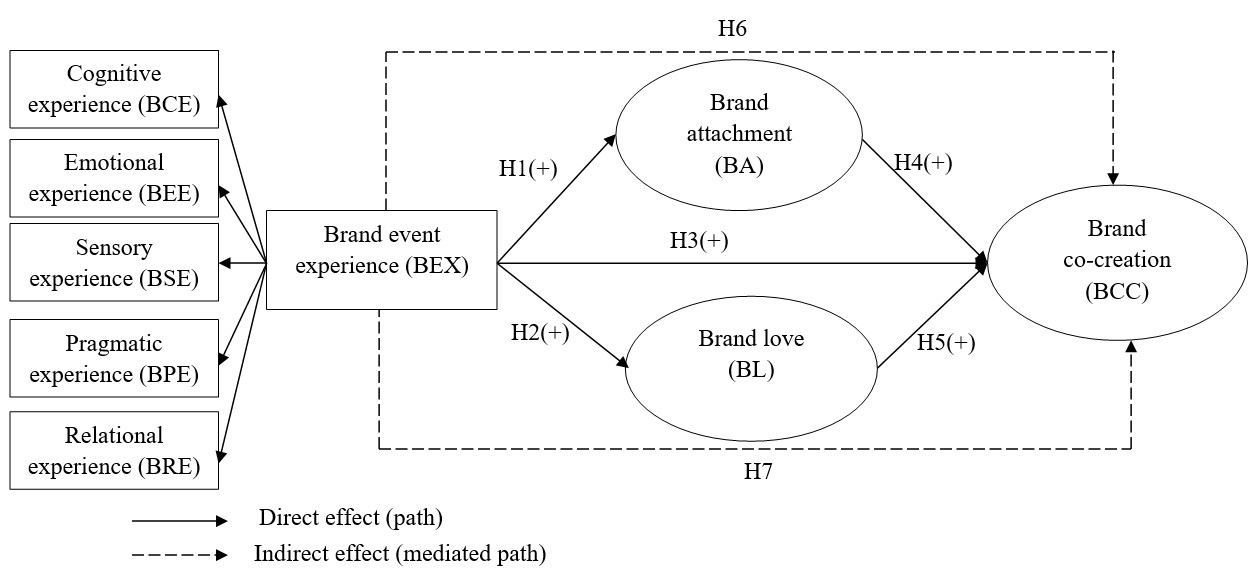
This study investigates the impact of brand event experience on brand co-creation, examining the mediating roles of brand attachment and brand love within the food and beverage (F&B) market in Vietnam. Employing a quantitative research design, the study analyzes survey data collected from 339 consumers who are regular users of F&B products and have previously participated in brand-related events. The proposed conceptual model is tested using Partial Least Squares Structural Equation Modeling (PLS-SEM), allowing for robust examination of both direct and indirect relationships among the constructs. The empirical findings provide strong evidence that brand event experience significantly and positively influences brand attachment, brand love, and brand co-creation behaviors. Moreover, both brand attachment and brand love are potent drivers of brand co-creation, underscoring the critical role of emotional bonds in motivating consumers to actively participate in value-and meaning-creation processes with brands. Notably, the results reveal that brand attachment and brand love partially mediate the relationship between brand event experience and brand co-creation. This mediation effect elucidates the distinct psychological mechanisms through which experiential interactions at brand events are translated into consumers' voluntary co-creative behaviors. The key contribution of this study lies in its explicit focus on brand events as strategic experiential touchpoints that foster brand co-creation. This aspect has received limited empirical attention in prior research. By unpacking the mediating roles of attachment and love, the study advances brand co-creation theory beyond its traditional emphasis on the general effects of experiential value on co-creation intentions or outcomes. From a managerial perspective, the findings underscore that well-designed brand events not only strengthen consumers' emotional connections with the brand but also stimulate their proactive engagement in co-creation activities. Consequently, brand events emerge as an effective managerial tool for enhancing brand governance, deepening customer participation, and building sustainable competitive advantages in the highly competitive F&B industry.