


Analysis of factors affecting economic growth in the Southeastern region of Vietnam, period 2015 – 2024
- University of Economics and Law
Abstract
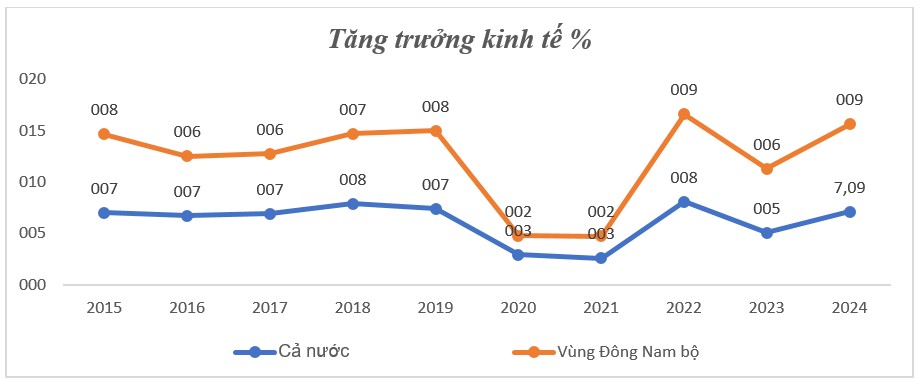
This article analyzes the growth performance and the factors influencing the economic growth of the Southeast Region of Vietnam during the 2015–2024 period. By employing descriptive statistics and synthetic analysis methods based on data from the General Statistics Office of Vietnam, the study delineates the landscape of economic growth and structural transformation within the region. The findings indicate that economic growth in the Southeast Region from 2015 to 2024 was driven by six key factors: (1) development orientations, policies, and strategies; (2) human resources; (3) science and technology; (4) investment capital; (5) infrastructure; and (6) natural resources. Based on a systematic analysis, the article proposes five solutions to bolster the region's economic growth in the new context: (1) continuing the effective implementation of development policies specifically tailored for the Southeast Region; (2) strengthening the linkages between enterprises and universities to cultivate high-quality human resources that meet developmental demands; (3) effectively implementing Resolution No. 57-NQ/TW regarding breakthroughs in science, technology, and innovation; (4) advancing administrative reforms through technology-driven approaches; and (5) developing interconnected infrastructure to enhance regional connectivity.