

The role of green human resource management and green knowledge sharing on green competitive advantage of enterprises: The moderating impact of green human capital
- University of Finance & Marketing, HCMC, Vietnam
Abstract
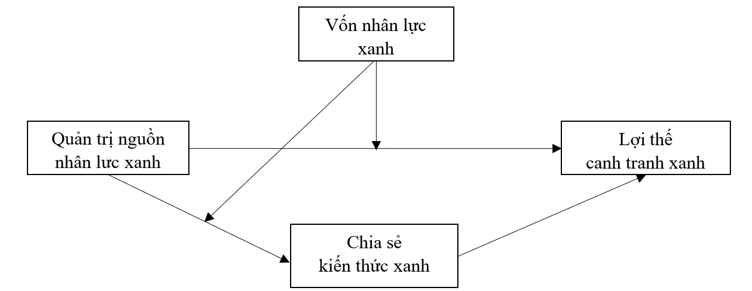
Based on method of using two theoretical frameworks as Resource Base View (RBV) and Ability-Motivation-Opportunity (AMO) to explore the impact of green human resource management (GHRM) and green knowledge sharing (GKS) on enterprise’s green competitive advantage (GCA) with the moderation of green human capital (GHC), we already collected data from 303 employees who are working in enterprises based in Ho Chi Minh City and we used the PLS-SEM model to test the research models and hypotheses. The results of this study showed that all hypotheses were accepted consist of H1, H2a, H2b, H2c và H3b, except for the hypothesis H3a regarding to the moderating impact of green human capital on the relationship between green human resource management and green competitive advantage. This study’s result already shows that green humance resource managment and green knowleage sharing have a positive impact on the enterprise’s green competitive advantage and the moderating role of green human capital on the relationship between green humance resource management and green knowleage sharing is confirmed. The green human capital factor does not play a moderating role in the relationship between green human resource managment and green competitive advanatge is an interesting finding of this study in the Vietnamese market. This finding should be also a need to be solved - problem for green human resource management activity in Vietnamese enterprises. In addition, the results of this study have emphasized the important and useful role of integrating the two theoretical frameworks consist of RBV and AMO in the process of building competitive advantages for enterprises as well as providing enterprise’s managers with useful practical knowledge in building green human resource management policies which could help to increase green competitive advantages for enterprises.