


Impact of behavioral factors, psychological factors, and genders on financial decision making: The case of household investors in Ho Chi Minh City
- Ho Chi Minh City University of Foreign Languages - Information Technology, Vietnam
- Greater Manchester Business School, University of Greater Manchester, UK
Abstract
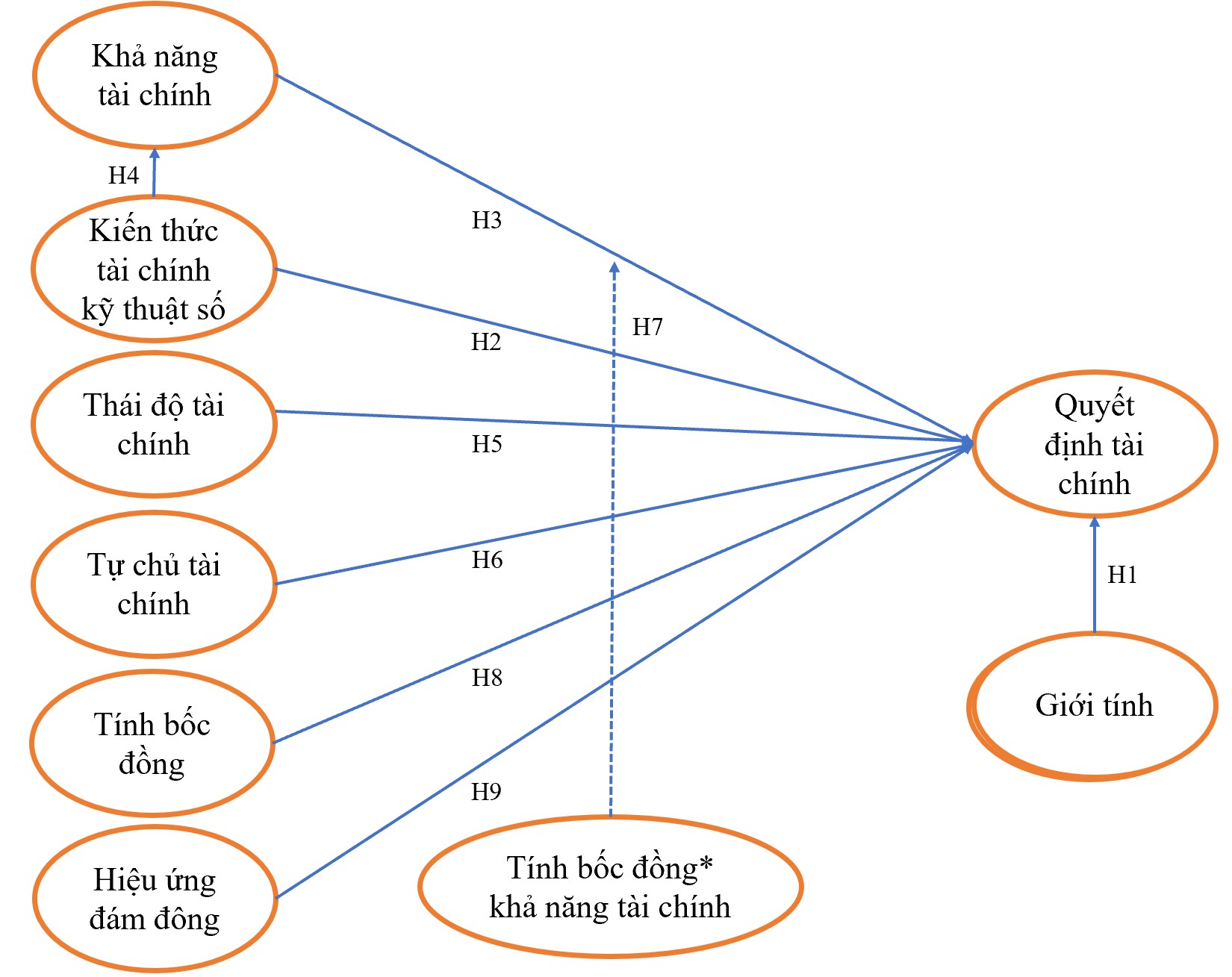
The research investigates the relationships among a range of behavioral and psychological factors, gender, and financial decision-making among household investors in Ho Chi Minh City. The survey was conducted using a questionnaire, with data collected via convenience sampling. Building on previous studies, the research team conducted expert interviews to refine the scale and questionnaire to align with the research objective. The study collected 667 responses from 667 household investors in Ho Chi Minh City. PLS-SEM has been used to test hypotheses. Then, PLS Predict has been applied to estimate the out-of-sample predictive power of the proposed model. Finally, a multi-group analysis has been applied to assess the differences across genders. The research results showed that financial digital literacy, financial capability, financial autonomy, impulsivity, and the herding effect all affect financial decision-making.
Additionally, financial capability partially mediates the nexus between financial digital literacy and financial decision-making. Also, impulsivity negatively moderates the relationship between financial capability and financial decision-making. The overall results of this research portray the influence of various psychological, behavioral, and gender factors on financial decision-making. Based on the research findings, the study supports the design of a feasible and lucrative financial portfolio to ensure households' long-term financial well-being.