


How do underlying aspects of public service motivation affect employee outcomes in public higher education institutions?
- University of Economics and Law, VNUHCM, Vietnam
- University of Finance and Marketing
Abstract
Public service motivation (PSM) has been the topic of many public administration and management studies since 1990. In Vietnam, 2016 marked the beginning of PSM research with a great deal of consideration of the impact of PSM on civil servants' job satisfaction, performance, and organizational commitment. However, no controlled studies have investigated PSM's impact on public employee outcomes, especially in the context of Vietnamese higher education institutions (HEIs). This study aims to examine how underlying aspects of public service motivation (Self-Sacrifice, Commitment to the Public Interest, Attraction to Public Policy Making, and Compassion) affect both positive and negative employee outcome factors, including Work Effort; Organizational Citizenship Behavior, Turnover Intention, and Work-related Stress. The results of structural equation modeling (SEM) point out that four PSM sub-constructs have varying effects on employee outcomes, as evidenced by the data from a random sample of three hundred and thirteen lecturers and administrators from Vietnamese public universities. In particular, three sub-constructs of PSM, namely self-sacrifice, dedication to the public interest, and attractiveness to public policymaking favorably influence employees' efforts in their duties; whereas compassion has a negligible influence on work efforts. Four aspects of PSM positively affect work effort and organizational citizenship behavior but adversely influence work-related stress and intention to leave the organization. This research demonstrates that a greater degree of PSM in all sub-constructs is favorably connected with public employees' organizational citizenship behavior. However, PSM negatively correlates with job stress although this is only supported by the sub-construct of selflessness. The findings of this research have proposed several significant recommendations for the approaches taken to human resource management within public universities in Vietnam.
Introduction
In public administration and management, public service motivation (PSM) has been the topic of a great deal of study since 1990. It is defined by Perry and Wise1 as “an individual's inclination to respond to reasons anchored primarily or exclusively in public institutions and organizations," which explains why employees are more likely than those in other fields to choose the public sector as their place of employment. In addition, there seems to be a tendency to interpret PSM as public personnel's knowledge and desire to contribute voluntarily to society's growth2, 3, 4. As a result, PSM positively impacts public employees' working attitudes and behavior to fully serve the public interest5. Public employees with higher PSM levels have better performance, longer-term engagement with their employer, and higher job satisfaction1, 6, 7, 8, 9.
Nevertheless, multiple empirical investigations have found no link between PSM and commitment to the organization, job satisfaction, or lower intention to leave10, 11. We believe inconsistencies in the PSM-outcomes relationship may vary depending on the context. In addition, numerous studies claim that PSM positively affects public sector employee outcomes since the public working environment and the values of public service employees are consistent12. However, PSM's influence on public employee attitudes and behavioral outcomes has received scant attention because of its complex nature. According to Gould-Williams13 and Palma14, organizational citizenship behavior is positively associated with PSM (OCB). In contrast, PSM has a negative association with well-being-related characteristics and attitudes at the workplace, such as stress and intention to quit the job. Nevertheless, the validity of these notions has primarily been examined in a Western environment with little emphasis paid to PSM in Vietnamese public institutions, particularly public universities.
Vietnam has been one of Southeast Asia's most active rising countries since the 1986 Doi moi (Renewal). Nevertheless, even though different campaigns and programs have been undertaken by socio-political organizations and state agencies in Vietnam, the outcomes have not been expected regarding public service efficiency and civil servant performance. As a result, rather than initiating campaigning, it is necessary to boost the performance of public sector personnel by strengthening the PSM. The year 2016 marked the beginning of PSM research in Vietnam. A great deal of consideration has been given to the impact of PSM on government officials' job satisfaction, performance, and organizational commitment, as well as the mediating role that PSM plays in information sharing among civil servants15, 16, 17. Furthermore, no controlled studies investigating the impact of PSM on employee attitude or behavior-related outcomes in public higher education institutions have been conducted. As a result, this study will test the hypothesis of (1) whether public service motivation has a positive link with an effort at work and organizational citizenship behavior of employees and (2) whether public service motivation has a negative link with employee turnover intentions and work-related stress. We employ an adapted scales research model to compare the relative impacts of four PSM sub-dimensions (Self-Sacrifice, Commitment to the Public Interest, Attraction to Public Policy Making, and Compassion) on employee outcomes (EOs). We place equal importance on positive and negative employee outcomes, such as Work Effort; Organizational Citizenship Behavior, and Turnover Intention; Work-related Stress.
An outline of the article is provided below. The first step is a brief overview of the research environments at Vietnam's public universities. Then, the results of PSM on workers are examined closely. Then, the study uses structural equation modeling (SEM) to test the hypotheses after completing the research methods. At last, we discuss the theoretical and practical implications of our research in the conclusion.
Research Context: Vietnam’s higher education institutions
Vietnam is now one of Southeast Asia's most dynamic emerging economies, more than three decades after the Doi moi (Renewal) of 1986. From 2000 to 2022, Vietnam's annual growth rate averaged 6.17 percent. Foreign direct investment (FDI) is booming because Vietnam has several comparative advantages and a favorable business climate, including an abundance of young individuals who are well-educated and well-informed. According to Muenjohn & McMurray18, compassion, honesty, unity, patriotism, hard work, and innovation are integral components of the Vietnamese work ethic. Most foreign investors also admire employees in Vietnam for their diligence, hard work, skillfulness, compassion, and reliability19. In theory, work ethic ideals substantially impact employee attitudes and behavior20. Hence, we anticipate that public service motivation will favor the attitudes and behaviors of employees concerning the outcomes of their jobs. Specifically, we expect this to happen in Vietnam's public universities.
There are 237 universities in Vietnam's higher education system, comprising 172 state universities and 65 private universities (MOET, 2020). Public universities, in particular, primarily provide the high-quality human resources required to develop Vietnam's economy21. The quality of higher education is largely determined by faculty and administrators, even if each institution has its own set of educational missions and objectives. In Vietnamese public higher education institutes, there are approximately 65 thousand public employees22. “Public employees are recruited based on working roles, working under contracts for public non-business units, and being paid from the government's financial resources in conformity with the legislation" according to the Law on Public Employees of Vietnam dated October 30, 2010 (Luat Vien chuc). As a result, employees at public universities can be classified as professional faculty with expertise in lecturing, academic research, and community service. Nonetheless, in the current setting of Vietnam, they encounter challenges in fully dedicating themselves to their colleges due to low official pay and time-consuming administrative tasks. As a result, they frequently supplement their income with outside teaching and scientific research endeavors or by taking on another adjunction role in the private sector. Enhancing faculty and staff service desires is a critical strategy to enhance the performance of public universities by fostering a positive workplace culture and fostering consensus among stakeholders. As a result, this research aims to inspire groups of officials (vien chuc) working for public sector units, notably academic personnel in higher education institutions, to make more outstanding efforts to improve their PSM to achieve better valence of the mission.
Literature Review and Developing hypotheses
Public Service Motivation
As a result of the proliferation of New Public Management, the public sector is coming under ever-increasing demand to provide evidence of its effectiveness and efficiency while simultaneously reducing its operating expenses, leading to more awareness of organizational performance. Hence, since the 1990s, a significant number of theoretical and empirical research have been conducted to investigate the connection between Strategic Human Resource Management and job performance23, 24, 25. According to Battaglio & French26, one of the strategic goals of general human resource management is to improve public service performance. Therefore, public sector workers' outcomes must be improved. Providing public goods and implementing poverty-reduction policies are just a few examples of the kind of tasks that state personnel is encouraged to take on because of the service ethic1. The decision to pursue public institutions could be motivated by an aspiration to contribute to the enrichment of community welfare or a sense of civic duty, also known as public service motivation27.
Public service motivation is defined as "an individual proclivity to respond to incentives grounded primarily or exclusively in public institutions”1, with three bases: rational, norm-based, and emotive reasons. Policy design and commitment to a broad goal are among the rational incentives. The effective incentives reflect a dedication to a social goal and benevolent patriotism, while the norm-based motives indicate an ambition to promote social justice through serving the public interest. According to Kim and Vandenabeele28, however, this classification does not distinguish between normative and emotional motives, and rational motives can be self-interested. As a consequence, different PSM bases were redefined in order to build a more international construct. As a result, public service motivation was categorized as instrumental, value-based, and identity based on self-sacrifice. Instrumental motives encompass performing effective public service, such as working in the government, participating in policy-making and participating in community activities. Value-based motives take into account various public values, including those related to public benefit, social responsibility, social equity, and social justice. Finally, individuals' identification motivations relate to their desire to belong to a social or political group. In order to evaluate the PSM theory, Perry29 devised a multidimensional scale with 24 items and four components, including attraction to public policy formulation, commitment to the public interest, compassion, and self-sacrifice. Our research is likewise based on this scale. Attraction to public policymaking, in particular, is "a rational motivator that assesses individual impressions of politics and the policymaking process" 26. Meanwhile, the last three dimensions examine public service's deeper public-spirited or selfless perspectives. For example, compassion examines an employee's dedication to patriotism and charity, whereas self-sacrifice assesses the individuals' readiness to take action for the greater good regardless of the cost to themselves.
Public Service Motivation and Work Effort
PSM is a powerful indicator of individual performance in the public sector, as indicated by substantial empirical evidence7, 30. According to Liang31, internally motivated employees have intrinsic desires for personal development, autonomy, and competence and will put in extra effort at work to satisfy such desires. Physical and mental exertion is used to measure work effort, which an employee invests in job-related activities and tasks, as opposed to the skill and responsibility needed by contractual duties and the unique combination of abilities and experience that an employee brings to the job32, 33.
Liang31 shows that intrinsic motivation considerably impacts task effort in crowdsourcing competitions. Employees with strong intrinsic motivation, or PSM, are more inclined to go above and beyond at work, which is a direct behavioral effect of their dedication and leads to success. Work effort is best predicted by the level of commitment of the workers, according to Gould-Williams34; thus, for the sake of the success of their organizations, public employees appear more capable of producing the necessary goals. Furthermore, when individual aspirations and a public organization's objectives are in sync, the individual expects a higher level of extra-role action and an exceptional commitment to the public goal35. Furthermore, a sub-construct of PSM called commitment to the public interest is linked to a higher readiness to put extra effort into that work7, 36.
According to Andersen & Kjeldsen8, employees with high public service motivation (PSM) are likely to act on their motivation because they have a firm conviction that the public will benefit from their efforts. Another way, a government employee who understands the good societal impact of their work will put in more effort, resulting in excellent job performance37. Research on PSM’s value to the working effort is vast and rising, but it primarily focuses more on job performance than on exerting effort to attain desired results30. Four studies show a positive correlation between PSM and increased labor effort, while a neutral relationship is seen in the fifth study. As a result, this study investigates the association between PSM and work effort to provide additional evidence on the subject. Thus, we propose the following hypothesis:
H1: The degree of public service motivation is positively correlates with the level of employee work effort in Vietnam’s public universities.
Public Service Motivation and Organizational Citizenship Behavior
Workplace behavior that promotes cheerful employees and organizational connections is known as Organizational Citizenship Behavior (OCB). Regardless of whether they receive recognition, employees' voluntary and informal prosocial acts add to the organization's effectiveness and increase public service quality 38, 39, 40. Furthermore, individual and organizational performance, such as performance appraisal and incentive distribution, organizational productivity, efficiency, cost-cutting, and customer happiness, are all linked to OCB in theory 41. As a result, Kim 42 believes that OCB is an excellent instrument for managing interdependence among employees in a work unit, enhancing collective outputs and organizational performance. Furthermore, individuals with greater OCB will carry out obligations beyond their job titles, like supporting co-workers, avoiding workplace confrontation, and fostering a productive and healthy workplace43.
According to existing studies, PSM impacts prosocial actions either in or out of an organization44. Therefore, PSM has a good link with workers' OCB and furthers the common good of the public. Data analysis in Kim's study42 has backed up his claim in the context of South Korea. High PSM employees who desire to assist the general public and contribute to society would be the driving force behind OCB in government entities. Furthermore, Shim and Faerman45 surveyed local government servants in Korea to support the premise that an individual's enthusiasm for public service is a strong predictor of organizational citizenship behavior (OCB). Boyd & et al. 46 show that a feeling of community responsibility has a limited, moderate effect on the link between PSM and OCB in a not-for-profit healthcare center in the United States. Individual PSM and OCB, on the other hand, have been proven to be mediated by a feeling of collective responsibility. PSM has a more significant impact on interpersonal behavior (OCBI) than on organizational behavior (OCB). On the other hand, Jin & et al.40 extend the notion of OCB to higher education, where professors frequently spend significant time with students, such as through in-class engagement and lecture preparation. They discover a tangible link between faculty PSM and OCB in US colleges. Based on previous research hypotheses and findings, we believe that PSM and OCB appear to have a positive statistical correlation in the context of Vietnam's higher education institutions. Thus, hypothesis H2 is presented here.
H2: The degree of public service motivation is positively correlated with the level of employees’ organizational citizenship behavior in Vietnam’s public universities.
Public Service Motivation and Turnover Intention
Employees' "change readiness" is referred to as "turnover intention" when they intend to willingly change jobs or organizations.47 In addition, it is referred to as the readiness of civil officials to leave an agency or organization48. There is a strong link between the intention to leave and the actual act of leaving, making it the most crucial prelude in mind49. Furthermore, external factors such as other work alternatives, which are harder to forecast, directly impact actual turnover behavior. An employee may strongly desire to depart but not decide to do so. Negative employee behaviors, including tardiness, absence, diversions, and underperformance, on the other hand, are usually linked to resignation plans. Such behavior degrades the quality of public service50. As a result, most management research focuses on employees' intentions to leave rather than their actual conduct. Researchers are looking for essential determinants of turnover intentions to design the most effective human resource management technique for maintaining skills.
According to a recent study, turnover intentions decrease due to a higher level of PSM10, 13, 51, 52, 53. Employees working in the public sector who had achieved high levels of PSM were more inclined to remain in their current positions53. Employees with a high PSM frequently choose jobs that allow them to fulfill their desire to help others and their altruistic goals. Furthermore, they are less likely to abandon their jobs because they identify as business members with similar aspirations.
In contrast to the prior reasoning, Gould-Williams & et al.13 find that PSM's direct influence on turnover intentions is insignificant. According to Bright10, PSM significantly affects whether or not people plan to leave government institutions. Individuals with a higher PSM report increased job satisfaction and are less inclined to consider quitting their positions than those with a lower PSM. His research, however, fails to confirm the theory that PSM has a detrimental impact on public officials' intentions to leave their professions, which POF mediates. The study by Moynihan and Pandey51 shows that PSM has a detrimental impact on tenure in public institutions. Also, Wang & et al.54 reveal that one of the most critical factors in determining whether or not geriatric nurses working in nursing homes intend to leave their jobs is their level of intrinsic drive. Despite inconsistent findings in the current PSM-turnover intentions research, we assume that a person with high PSM will have a lower likelihood of resigning than personnel with low PSM in higher education institutions. As a result, we hypothesize that:
H3: The degree of public service motivation is negatively correlated with the level of employee turnover intentions in Vietnam’s public universities.
Public Service Motivation and Work-related Stress
A person is more likely to experience stress related to their job if they have the perception that they do not possess the essential capabilities, level of expertise, or resources required for their role55, 56. That difficulty is exacerbated by an inability to handle the stress of the work57. Many factors can cause workplace stress, including work overload, organizational factors, emotional demands, purpose ambiguity, role conflict, and red tape58, 59. The physical and mental effects of stress at the workplace, such as irritability, sleeplessness, hypertension, and anxiety are also detrimental to people's well-being. The growth of negative attitudes and behaviors and decreased personal consequences can be attributed to these signs and symptoms60. Due to the nature of their work, teachers may be more susceptible to burnout than those in other professions 61.
Moreover, public sector efficiency and effectiveness may be negatively impacted by the increased stress on civil servants62. However, the benefits of PSM in reducing workplace stress have received little attention, even though employees and organizations in all sectors are harmed by high levels of stress60, 39. Following certain studies, PSM can lessen the effect of organizational politics (a cause of workplace stress) on employee and organizational outcomes. However, their research indicates that high PSM personnel would face greater demands to accomplish their professional objectives59, 9. To put it another way, PSM has a same-dimensional effect with work-related stress, implying that higher PSM employees are more likely to be influenced or harmed by office politics than lower PSM employees.
On the other hand, this new interest in job stress and public service motivation directly affects the increasing popularity of the Job Demands-Resources paradigm63. According to Bakker64, PSM can support public officials by lowering the stressors they have to deal with. In addition, PSM may also provide stress reduction for persons who want to contribute positively to society39. Liu and colleagues60 conduct an empirical study confirming how PSM helps police personnel minimize the deleterious impacts of work-related stress on personal health. Their findings show that the less motivated police officers are more likely to be exhausted and drained by work-related stress. According to Gould-Williams & et al.39, work-related stress would be reduced if employees with high PSM contributed to the greater good. Nevertheless, his investigation suggests that when PSM rises among government employees, so will the level of work-related stress. Moreover, PSM indirectly reduces stress in the workplace through a mediated effect known as “personal-organizational fit.” We hope to better understand the relationship between these two variables by addressing the mixed results of prior research. Based on theoretical reasoning and practical facts, we expect that the high PSM public officials will endure, the less work-related stress they will endure. As a result, the following theory is proposed:
H4: The degree of public service motivation is negatively correlated with the amount of work-related stress among university employees in Vietnam.
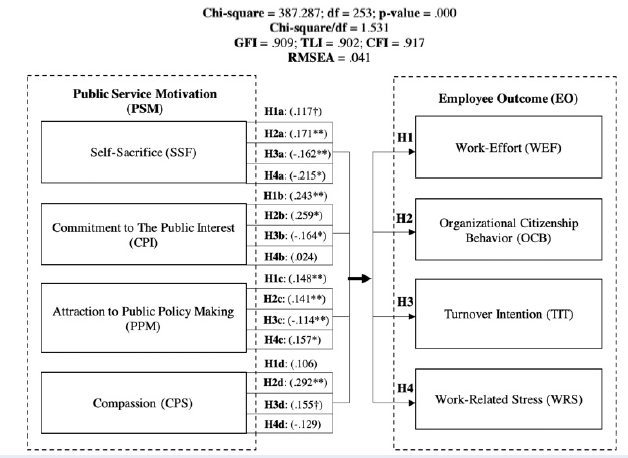
Figure 1 depicts our conceptual model based on the preceding predictions.

Research Model
Research Method
Sample
For PSM research, the higher education institutions in Vietnam are surveyed to collect information on independent and dependent variables. This provides significant and valuable data sources. We randomly chose 313 university administrators and academic members from 45 Vietnamese public universities based on the Sample Size Formula: N=5m (Hair, 2006). The results of this study will be more representative because of the wide range of public universities included in it. Even though they account for only 30% of public institutions countrywide, the South, Central, and North of Vietnam have the most selective universities.
Measures
Based on previous research and adjusted for the PSM context in Vietnam, a questionnaire for quantitative research was constructed that encompassed the entire issues discussed in the present study. Table 1 lists the questionnaire items associated with each study's measurements. Statements on a 5-point Likert scale, with options ranging from "strongly agree" to "strongly disagree," are included in every survey question. Applicability can only be determined based on the item's validity and reliability. Therefore, we begin by defining model components and analyzing all relevant articles to identify questions that adequately characterize the things employed in this study.
Additionally, the surveys were sent to experts for changes and clarifications on the questionnaire content. The second questionnaire version was then revised based on the experts' opinions. In addition, we conducted pilot testing with over 100 people to see if the items matched the model we projected for our study.
Defining and Measuring the Variables
|
Constructs |
Items are measured |
Sources |
|
Public Service Motivation |
[The Self-sacrifice] [SSF1] I value societal contributions more than personal accomplishments. [SSF2] My societal well-being is important to me, and I'm willing to make considerable sacrifices to help it. [SSF3] Responsibility, in my opinion, takes precedence over ego. |
Perry & Wise (1996); Kim (2012) |
|
[The Attraction to Public-policy Making] [PMP1] My interest lies in the development of public programs that are beneficial to either my country or my community. [PMP2] The idea of discussing my views with others regarding issues of public policy fascinates me. [PMP3] It brings me a great deal of joy to see the results of a public endeavor in which I played a key role. | ||
|
[The Commitment to The Public Interest] [CPI1] To me, it's an obligation of citizenship to serve the community. [CPI2] I place a high value on meaningful public service. [CPI3] Even if it were detrimental to my own interests, I would prefer that public officials act in the best interests of the entire community. | ||
|
[The Compassion] [CPS1] When I observe someone in distress, I find it impossible to restrain my emotions. [CPS2] Things that happen to me on a daily basis serve to remind me of our interconnectedness. [CPS3] I sympathize with the suffering of others who are less fortunate. | ||
|
Work Effort |
[WEF1] As long as it's necessary, I'll stay up late to help out. [WEF2] I never turn down more responsibilities or obligations. [WEF3] Increasing my efficiency and effectiveness at work is something I'm constantly researching. |
Gould-Williams, J. (2003) |
|
Organizational Citizenship Behavior |
[OCB1] I go above and beyond to assist new staff. [OCB2] I assist people with hefty workloads. [OCB3] I propose enhancements to the organization's operations. [OCB4] I preserve and safeguard organization assets [OCB5] When other employees criticize the organization, I provide a defense. |
Boyd, N., Nowell, B., Yang, Z., & Hano, M. C. (2018) |
|
Turnover Intentions |
[TIT1] It is not in my plans to continue employed by this organization for an extended period of time. [TIT2] I have given significant consideration to departing from this organization. [TIT3] I have a strong desire to advance my career to a position that is even more desirable than the one I currently occupy. |
Gould-Williams, J. S., Mostafa, A. M. S., & Bottomley, P. (2015) |
|
Work-related Stress |
[WRS1] My occupation is a major source of stress for me. [WRS2] At work, I am subjected to extremely stressful situations. [WRS3] My work is incredibly stressful |
Gould-Williams, J. S., Mostafa, A. M. S., & Bottomley, P. (2015) |
Method
To improve and substantiate study findings, researchers combine qualitative and quantitative methodologies. Therefore, an exploratory factor analysis (EFA) was utilized in conjunction with qualitative interviews to help develop scales for the quantitative data collection. Furthermore, we use CFA (Confirmatory factor analysis) and SEM (Structural Equation Modelling) to discover latent variables using a collection of manifest indicators and test hypotheses about their correlations. The outcomes of this research are evaluated in a two-step process utilizing IBM SPSS statistics version 24.0 and IBM SPSS Amos version 23.0. The statistical analysis program known as SPSS explains social demographics, participant characteristics, mean, standard deviation, reliability, and exploratory factor analysis. Simultaneously, we employ Amos to evaluate the central hypothesis in this study's structural equation modeling (SEM). Multivariate regression models, such as those used in management, business, and economics, might benefit from the statistical technique known as SEM. It also examines the causal-effect links between observed variables and latent variables concurrently. Saxena & Khanna65, Smaliukienė & et al.66, Cunningham & et al.67, and Putri & et al.68 have all employed SEM in recent scientific studies.
This research used structural equation modeling (SEM), a multivariable approach, to investigate the function of public service motivation and its impact on Vietnamese universities. The examination of model fit indices and coefficient parameters is used to assess the link between the eight latent structures after the fundamental assumptions of SEM are fulfilled (SSF, CPI, PMP, CPS, WEF, OCB, TIT, and WRS). A table of fit indices is shown in Table 5.
Results
Descriptive statistics
To support our claim, we collected data from 313 public employees working in 45 Vietnamese higher education institutions. Table 2 indicates that 51.5% of the respondents were male, and 54.6% were between 30 and 39. More than 80 percent of the survey participants are faculty and staff from public institutions in Vietnam who are acquainted with and recognize public service motivation. 22.3 percent of respondents had worked for less than five years, 60.7 percent for five to fifteen years, and the rest for more than fifteen years.
Demographic Profile of Respondents (n=313)
|
N = 313 respondents |
Number of respondents |
Percentage (%) |
|
Respondent Gender | ||
|
Female |
152 |
48.5% |
|
Male |
161 |
51.5% |
|
Respondent Age | ||
|
>60 50 – 59 40 – 49 30 – 39 20 – 29 |
5 19 94 171 24 |
1.5% 6.2% 30% 54.6% 7.7% |
|
Position of the Respondent | ||
|
Faculty |
209 |
66.9% |
|
Administrators |
46 |
14.6% |
|
Manager |
53 |
16.9% |
|
Other |
5 |
1.5% |
|
Years of working at the institution | ||
|
> 15 years 10 – 15 years 5 – 10 years 2 – 5 years < 2 years |
53 91 99 41 29 |
16.9% 29.2% 31.5% 13.1% 9.2% |
Exploratory Factor Analysis (EFA)
In two steps, this study undertakes unidimensional and convergent validity for the concept validity. First, according to O'Leary-Kelly & Vokurka69, unidimensional validity requires a collection of observable variables to measure one hidden variable. Instead of employing unidimensional validity in exploratory factor analysis, it is preferable to use varimax indicators, principal axis factoring, and factor extraction using eigenvalues70. For each component, the loading of a factor must be larger than or equal to 0.50 in order to appropriately reflect a variance difference of 25%71. Another step is to weed out any observable variables that do not fit one of the following descriptions. Low factor loading, or component loading that reflects more than one factor, is all relevant here . As shown in Table 3, observable variables with less than a 0.5-factor loading were excluded from further research since the number of factors loading, and the range of Cronbach's alpha began at 0.521 (WRS3) and 0.894 (OCB1). (OCB1: I go above and beyond to assist new staff).
Table 3 displays information regarding factor loadings as well as Cronbach alpha values. EFA loading values range from 0.582 to 0.760 for the first component, self-sacrifice, which is characterized by a three-parameter [SSF-1]-[SSF-3]. In addition, the CPI1 (0.676), CPI2 (0.632), and CPI3 (0.624) levels indicate a strong commitment to the public interest. The third element, interest in public policymaking, is represented by PMP1, PMP3, and PMP3, respectively, with values of 0.630, 0.894, and 0.592. Competitive intensity owns the fourth element, compassion with [CPS1] – [CPS3], which has a substantial value ranging from 0.526 to 0.654. WEF1, WEF2, and WEF3 are the three components of the work-effort factor, and 0.582 to 0.608 are the factor loadings for these items. OCB2, OCB3, OCB4, and OCB5 are the names given to the four variables that pertain to organizational citizenship behavior and have EFA loadings that range from 0.582 to 0.769. The two remaining components of a load factor of more than 0.5 are work-related stress and the intention to leave the organization. In addition, the eigenvalues of the eight components are all more than 1.171, and the total explained variance is 62.55 percent of the variance. The items' appropriateness for factor analysis was verified using the Kaiser-Meyer-Olkin (KMO) statistic, which had a value of 0.70671.
The factor loading and the Cronbach's Alpha statistic
|
Factor |
Code |
Factor loading |
Cronbach’s alpha | |||||||
|
1 |
2 |
3 |
4 |
5 |
6 |
7 |
8 | |||
|
SSF |
SSF1 |
.582 |
.747 | |||||||
|
SSF2 |
.760 | |||||||||
|
SSF3 |
.740 | |||||||||
|
CPI |
CPI1 |
.676 |
.680 | |||||||
|
CPI2 |
.632 | |||||||||
|
CPI3 |
.624 | |||||||||
|
PMP |
PMP1 |
.630 |
.738 | |||||||
|
PMP2 |
.894 | |||||||||
|
PMP3 |
.592 | |||||||||
|
CPS |
CPS1 |
.585 |
.602 | |||||||
|
CPS2 |
.654 | |||||||||
|
CPS3 |
.526 | |||||||||
|
WEF |
WEF1 |
.608 |
.609 | |||||||
|
WEF2 |
.582 | |||||||||
|
WEF3 |
.586 | |||||||||
|
OCB |
OCB2 |
.621 |
.798 | |||||||
|
OCB3 |
.735 | |||||||||
|
OCB4 |
.582 | |||||||||
|
OCB5 |
.769 | |||||||||
|
TIT |
TIT1 |
.574 |
.601 | |||||||
|
TIT2 |
.584 | |||||||||
|
TIT3 |
.526 | |||||||||
|
WRS |
WRS1 |
.622 |
.625 | |||||||
|
WRS2 |
.691 | |||||||||
|
WRS3 |
.521 | |||||||||
Confirm factor analysis (CFA)
The subsequent step of the general technique explores the validity of a measurement model and assesses it using convergent validity. In order to check for converging validity, two extracted average variances are compared to composite reliability (CR)72. According to Akkucuk (2014), Composite Reliability (CR) examines the reliability and consistency of the measurement variables, whereas convergence is measured by using the Analytical Value Estimator (AVE)73. When a latent variable's coefficient of determination (CR) exceeds 0.6, it is eligible to hold74, 75.
The finding of the result indicates that all CR values for nine components meet the required conditions. There are seven different constructions: SSF (0.755), CPI (0.688), PMP (0.611), CPS (0.757), WET (0.611), TIT (0.801), and WRS (0.603). In addition, the requirement satisfying AVE should be larger than 0.5; however, convergence validity may be accepted if CR is greater than 0.6 and AVE is less than 0.576. Table 4 demonstrates that the CR value of nine components surpasses the 0.6 minimum thresholds, while the AVE value is less than 0.5, indicating convergence validity.
Standardized Regression Weight, Composite Reliability, and Average Variance Extracted
|
Factor |
Code |
Standardized Regression Weight |
Error Variance |
Item R-square |
CR |
AVE |
|
SSF |
SSF1 |
.621 |
.614 |
.386 |
.755 |
.509 |
|
SSF2 |
.818 |
.331 |
.669 | |||
|
SSF3 |
.688 |
.527 |
.473 | |||
|
CPI |
CPI1 |
.708 |
.499 |
.501 |
.688 |
.428 |
|
CPI2 |
.710 |
.496 |
.504 | |||
|
CPI3 |
.527 |
.722 |
.278 | |||
|
PMP |
PMP1 |
.635 |
.597 |
.403 |
.757 |
.517 |
|
PMP2 |
.892 |
.204 |
.796 | |||
|
PMP3 |
.594 |
.647 |
.353 | |||
|
CPS |
CPS1 |
.591 |
.651 |
.349 |
.610 |
.343 |
|
CPS2 |
.608 |
.630 |
.370 | |||
|
CPS3 |
.557 |
.690 |
.310 | |||
|
WEF |
WEF1 |
.508 |
.742 |
.258 |
.611 |
.346 |
|
WEF2 |
.621 |
.614 |
.386 | |||
|
WEF3 |
.628 |
.606 |
.394 | |||
|
OCB |
OCB2 |
.653 |
.574 |
.426 |
.801 |
.504 |
|
OCB3 |
.738 |
.455 |
.545 | |||
|
OCB4 |
.630 |
.603 |
.397 | |||
|
OCB5 |
.804 |
.354 |
.646 | |||
|
TIT |
TIT1 |
.539 |
.709 |
.291 |
.603 |
.337 |
|
TIT2 |
.600 |
.640 |
.360 | |||
|
TIT3 |
.599 |
.641 |
.359 | |||
|
WRS |
WRS1 |
.565 |
.681 |
.319 |
.630 |
.366 |
|
WRS2 |
.712 |
.493 |
.507 | |||
|
WRS3 |
.522 |
.728 |
.272 |
Structural equation modeling (SEM)
Table 6 demonstrates that the results validate Hypothesis H1 that Work Effort at Vietnamese public universities is positively linked to PSM. According to (H1a) (t = 1.918, r =0.117 and p < 0.01) and (H1b) (t = 2.821, r =0.243 and p<0.01), both self-sacrifice and devotion to the public good have a beneficial influence on their work effort. Additionally, the high level of interest that faculty and staff members have in formulating public policy influences the amount of effort they put forth in their jobs (H1c) (t = 2.819, r =0.148, and p <0.01). However, there is no statistically significant link between compassion and labor effort (H1d: r =0.106 and p > 0.1). As a result, H1 has some support.
Higher levels of self-sacrifice, commitment to the public interest, appeal to public policymaking, and compassion is associated with organizational citizenship behavior among Vietnam's state-run universities. (H2a: r =0.171, p<0.01), (H2b: r =0.259, p =0.013), (H2c: r =.141, p<0.01), and (H2d: r =0.292, p<0.01).
Interestingly, PSM is statistically significant when it comes to employees' intentions to leave their professions at Vietnam's public universities. (H3). The results for hypotheses H3a, H3b, and H3c show that faculty and staff's self-sacrifice, commitment to the public good, and interest in public policymaking all harm their turnover intention (SSF -> TIT: r = -0.162 and p<0.01; CPI -> TIT: r = -0.164 and p<0.05; PMP -> TIT: r = -0.114 and p<0.05. However, the opposite consequence is seen for hypothesis H3d: compassion may boost their turnover intention (CPS -> TIT: r =0.155 and p<0.1). Consequently, the data provide evidence supporting hypothesis H3, which states that the lower the PSM, the greater the likelihood of quitting Vietnamese public universities.
According to Figure 2 and Table 6, a portion of hypothesis H4 has been partly confirmed. Our findings support the hypothesis that a higher level of PSM at a Vietnamese university reduces work-related stress among workers (H4a: r = -0.157, p =0.069, support), although we are not supported by other criteria such as the appeal of public policy making (H4c: r =0.190, p =0.008), and compassion (H4d: -.066, p > 0.1, not support); with a commitment to serving the public interest (H4b: r =0.106, p > 0.1, not support).
Model Fits.
|
Fit Index |
Value recommendation |
This Investigation |
Source |
|
-value (x2) |
≥ 0.05 |
.000 |
Hair et al. (2010) |
|
Minimum Discrepancy / Degrees Of Freedom (CMIN / df) |
≤ 3 |
1.531 | |
|
Goodness of Fit Index (GFI) |
≥ 0.9 |
.909 | |
|
Tucker–Lewis Index (TLI) |
≥ 0.9 |
.902 | |
|
Comparative Fit Index (CFI) |
≥ 0.9 |
.917 | |
|
Root Mean Square Error of Approximation (RMSEA) |
≤ 0.06 |
.041 |
Standardized Regression Weights.
|
Hypothesis |
Estimate (r) |
S.E. |
C.R. (t-value) |
-value |
Outcome | |||
|
H1 |
H1a |
PSM -> WEF |
SSF -> WEF |
.117 |
.061 |
1.918 |
† |
Supported |
|
H1b |
CPI -> WEF |
.243 |
.086 |
2.821 |
** |
Supported | ||
|
H1c |
PMP -> WEF |
.148 |
.053 |
2.819 |
** |
Supported | ||
|
H1d |
CPS -> WEF |
.106 |
.107 |
.994 |
> 0.1 |
Not support | ||
|
H2 |
H2a |
PSM -> OCB |
SSF -> OCB |
.171 |
.062 |
2.775 |
** |
Support |
|
H2b |
CPI -> OCB |
.259 |
.085 |
-2.502 |
* |
Support | ||
|
H2c |
PMP -> OCB |
.141 |
.052 |
2.733 |
** |
Support | ||
|
H2d |
CPS -> OCB |
.292 |
.113 |
2.596 |
** |
Support | ||
|
H3 |
H3a |
PSM -> TIT |
SSF -> TIT |
-.162 |
.054 |
-3.015 |
** |
Support |
|
H3b |
CPI -> TIT |
-.164 |
.071 |
-2.296 |
* |
Support | ||
|
H3c |
PMP -> TIT |
-.114 |
.044 |
-2.582 |
** |
Support | ||
|
H3d |
CPS -> TIT |
.155 |
.093 |
1.671 |
† |
Not Support | ||
|
H4 |
H4a |
PSM -> WRS |
SSF -> WRS |
-.215 |
.086 |
2.502 |
* |
Support |
|
H4b |
CPI -> WRS |
.024 |
.113 |
.210 |
> 0.1 |
Not Support | ||
|
H4c |
PMP -> WRS |
.157 |
.071 |
2.197 |
* |
Not Support | ||
|
H4d |
CPS -> WRS |
-.129 |
.149 |
-.868 |
> 0.1 |
Not support | ||
|
Note: *p<0.1. **p < .01. ***p < .001; C.R.—critical ratio; S.E.—standard error | ||||||||

The results of the Structural Equation Model
Discussion
Many studies show that PSM can improve employees' outcomes in various ways, but non-consistent77, 78. The impact of PSM on employee performance differs depending on various performance objectives, such as job satisfaction among professional and managerial staff11.
Furthermore, the PSM study was not entirely done among public sector personnel 79, signaling a lack of PSM literature variety in the sample. In the context of developed countries such as the United States, Korea, Egypt, and China, thorough research with samples of government workers demonstrates that PSM affects employee outcomes in both direct and indirect ways5, 13, 40, 42, 45, 46, 54. Nonetheless, little study on PSM has focused on emerging countries like Vietnam, particularly in education and health care. This study will investigate several faculty members and staff members in public universities in Vietnam to fill the existing gaps in research. Four PSM sub-constructs were examined in our study for their direct effects on positive and negative public employee outcomes. As a result of this research, we have gained a better knowledge of public service motivation (PSM). Public employees with greater PSM tend to put more effort into their work than those with lower PSM in Vietnam's public universities. This study backs up the conclusion of Liang & et al.31 that intrinsic motivation is a crucial driver of work effort in crowdsourcing competitions.
First, our data analysis reveals that three sub-constructs of PSM, namely self-sacrifice, dedication to the public interest, and attractiveness to public policymaking, favorably affect public employees' efforts in their duties7, 36 (H1). Nonetheless, compassion has a negligible influence on work efforts, which did not coincide with our initial expectations. Employees' compassion is linked to patriotism or charity. Even though the growing body of research all points to the importance of PSM in improving employee outcomes across multiple dimensions 5, 10, 11, 13, 14, 80. Evidence supporting this idea has created some doubts about the effect of PSM on individual performance27. PSM and performance have a mixed relationship (positive or negative)81. Furthermore, compassion can evoke positive emotions and attitudes in the workplace, and it is also one of the most enduring traits of every Vietnamese individual82. Thus, compassion leads to positive feelings and behaviors toward others such as caring, concern, tenderness, and an orientation toward supporting, helping, and understanding others. As a result, compassionate lecturers and officers in Vietnamese public institutions will spend more time caring for those in need, such as students, than on their jobs.
Second, several related studies42, 45 focus on organizational citizenship behavior (OCB) in public organizations to empirically investigate the critical role of PSM. This research demonstrates that a greater degree of PSM in all sub-constructs is favorably connected with public employees' organizational citizenship behavior (H2). Put differently, high PSM persons, such as self-sacrifice, enthusiasm, devotion to public organizations, and interest in public policy-making, are doubtlessly connected with OCB performance at Vietnamese public universities more than low PSM individuals. This study supports Gould-Williams & et al. 's assertion13 that OCB has been noted for its role in the intra-organizational performance of PSM. As a result, we hope that the evidence of our findings will support the existing literature's positive association between PSM and OCB.
Third, our findings on the intention of public employees to leave are consistent with Moynihan and Pandey51 and Wang & et al.54. We believe that the greater the PSM of public employees, the less likely they are to leave their jobs in government. According to this study, PSM has significant direct adverse effects on self-sacrifice, commitment to the public interest, and interest in the policy-making of individuals who intend to quit smoking. However, we discover that compassion has a slightly significant effect on turnover intention. It can be stated that when working in institutions, public officials with much compassion are more likely to figure out that their fundamental duty is to help those in vulnerable positions. As a result, they would leave their employment in the long term to follow their life-value aspirations. Thus, we may reasonably conclude that our hypothesis about PSM's detrimental impact on turnover intention is only partially justified. This finding raises whether or not academics and officers in Vietnam with higher compassion are more inclined to quit their job at university.
Lastly, PSM negatively correlates with job stress (H4), although this is only supported by the sub-construct of selflessness (H4a). Government agencies frequently rely on sincerely driven individuals to make personal sacrifices. PSM's behavior process evaluates an individual's willingness to make devotion and contribute to the public benefit despite personal consequences. Individuals with a high level of self-sacrifice are more interested in community welfare and the provision of good works for the public, which leads to their commitment to providing public services that no one else would be ready to do, despite the advantages to society83, 84. People with a high PSM in the self-sacrifice component care more about the community's interests than their own and the consequences of inaction for the welfare of others and society. Hence, they are willing to forego personal benefit in order to benefit the community as a whole. Nevertheless, commitment to the public good, interest in public policymaking, and compassion are unsubstantiated. Our results show that there is a statistically significant link between a desire to participate in policy-making and stress at work, but the direction of the link is not as expected (H4c). This suggests that PSM has a modest effect on reducing stress at work, which is in line with previous research.
Conclusion
Generally, individuals with a high PSM score may have superior individual performance, providing some ideas for successful and efficient human resource management for state-owned institutions85. The conclusions of this study have a wide range of consequences for Vietnamese public sector HR management, notably in higher education. First, there is a more significant impact on public employees' work efforts from the first two parts of PSM, such as their commitment to the public interest and their interest in public policymaking. As integral participants in the policymaking process, the commitment to the public interest and public policymaking inspires a strong sense of civic duty. As a result, it may be claimed that prioritizing the participation and motivation to serve the public interest of teachers and staff in Vietnamese public institutions during policy creation is critical. Individuals may be more likely to voice individual perspectives for communal benefit and social growth if they have profound knowledge and a high degree of critical thinking, reinforcing their self-importance.
Public employees in general, and university faculty and staff in particular, should be given more opportunities to present their opinions on decisions related to policy-making in public organizations, particularly for higher education. Second, professors and staff with high PSM intend to put in extra effort at work and are unlikely to experience work-related stress or plan to leave. Public employees are more committed to their professions and less likely to leave the institution when they work in an environment that aligns with their goals and beliefs, which strengthens OCB in public institutions. As a result, public administrators should implement successful initiatives to reinforce faculty and staff's perceptions of public institutions' mission, goals, and norms. As a result, they will understand how to serve the community's interest by contributing to policymaking and providing good work. Third, intrinsic rewards are more valuable to people with a high PSM, like a sense of success or accomplishing something important above extrinsic motivation, rewards, or other incentives like praise, fame, or money. In keeping with Houston's reasoning, public universities should alter their incentive structures to meet the PSM of faculty and staff86.
There are several crucial limitations to consider. To begin with, this study, like prior experimental research on PSM, shows mixed results on the effect of PSM sub-constructs on work effort, turnover intention, and work-related stress. More investigation is required to shed light on the problem and present additional proof for the links being made. Second, we may have some possible bias in the study samples because we did not evaluate the comparison of PSM of lecturers and officers in public and private higher education schools in Vietnam. Third, we create items to measure Work Effort based on earlier research by Gould-Williams 34 and Leisink and Steijn7. However, using a self-evaluation questionnaire to assess employees’ working efforts could introduce bias in the results.
ACKNOWLEDGEMENT
This research is funded by Vietnam National University Ho Chi Minh City (VNU- HCM) under grant number B2022-34-02.
ABBREVIATIONS
AVE: Average Variance Extracted
CFA: Confirmatory factor analysis
CPI: Commitment to The Public Interest
CPS: Compassion
CR: Composite Reliability
EFA: Exploratory Factor Analysis
EO: Employee Outcomes
FDI: Foreign Direct Investment
HEIs: Higher Education Institutions
KMO: Kaiser-Meyer-Olkin
OCB: Organizational Citizenship Behavior
PMP: Attraction to Public-policy Making
PSM: Public Service Motivation
SEM: Structural Equation Modeling
SSF: Self-sacrifice
TIT: Turnover Intentions
WEF: Work Effort
WRS: Work-related Stress
CONFLICT OF INTEREST
The author declares that there is no conflict of interest.
AUTHORS’ CONTRIBUTIONS
All authors contributed equally to the manuscript; all authors had approved the final version.